

Overview
Personal cybersecurity practice lab to understand network reconnaissance and scanning using the Metasploit Framework. The lab focused on identifying live hosts, open ports, and active services within a target environment to simulate real-world penetration testing and ethical hacking techniques.
Methodology
The following steps were performed during this project:
Opened the Parrot Security Linux terminal.
Started the Metasploit Framework.
Selected the required auxiliary scanning module.
Configured the target IP address or network range.
Executed the scan.
Analyzed the discovered hosts, ports, and services.
Documented the results obtained during scanning.
Network Scanning using Metasploit
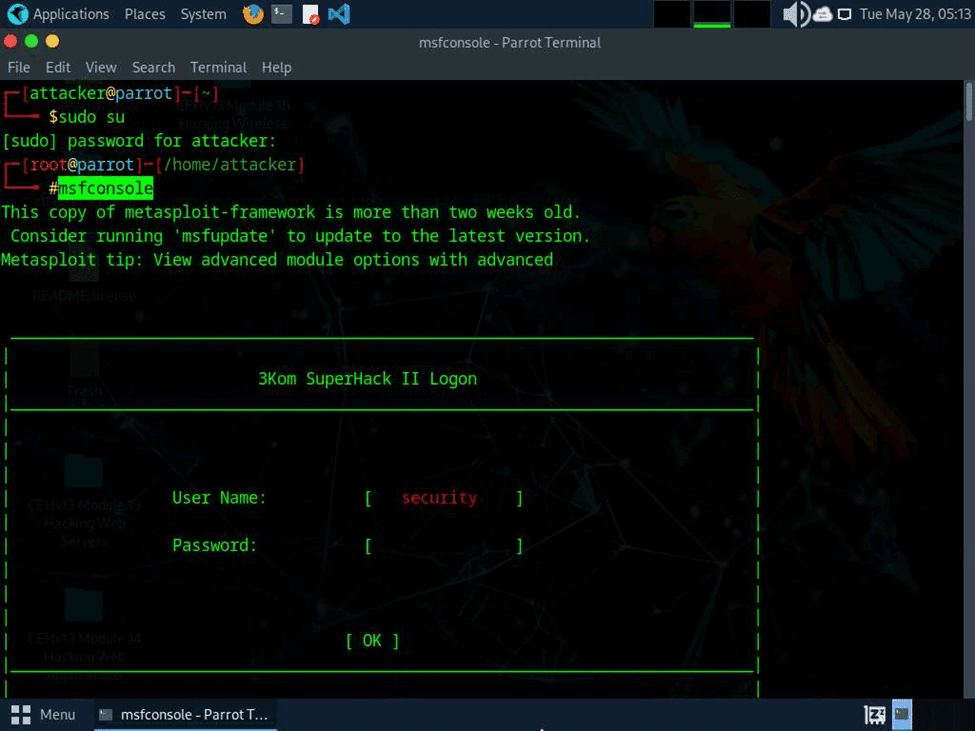
Step 1: Launch Metasploit Framework
The Metasploit Framework was started using the following command:
msfconsole
This launched the Metasploit environment used for scanning and reconnaissance.
Step 2: Search for Scanning Modules
The available scanning modules were searched using the following command:
search portscan
This displayed multiple auxiliary modules related to network scanning.
Step 3: Select a Scanner Module
A suitable scanner module was selected for scanning the target network.
use auxiliary/scanner/portscan/syn
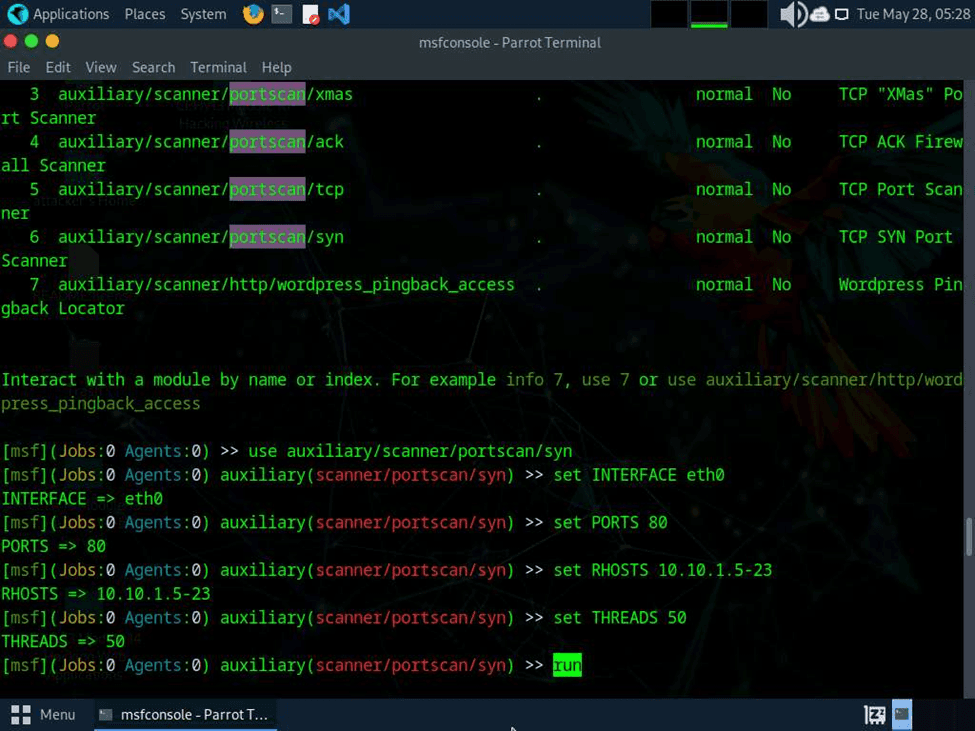
Step 4: Configure Target IP Address
The target IP address was configured using the following command:
set RHOSTS 10.10.1.22
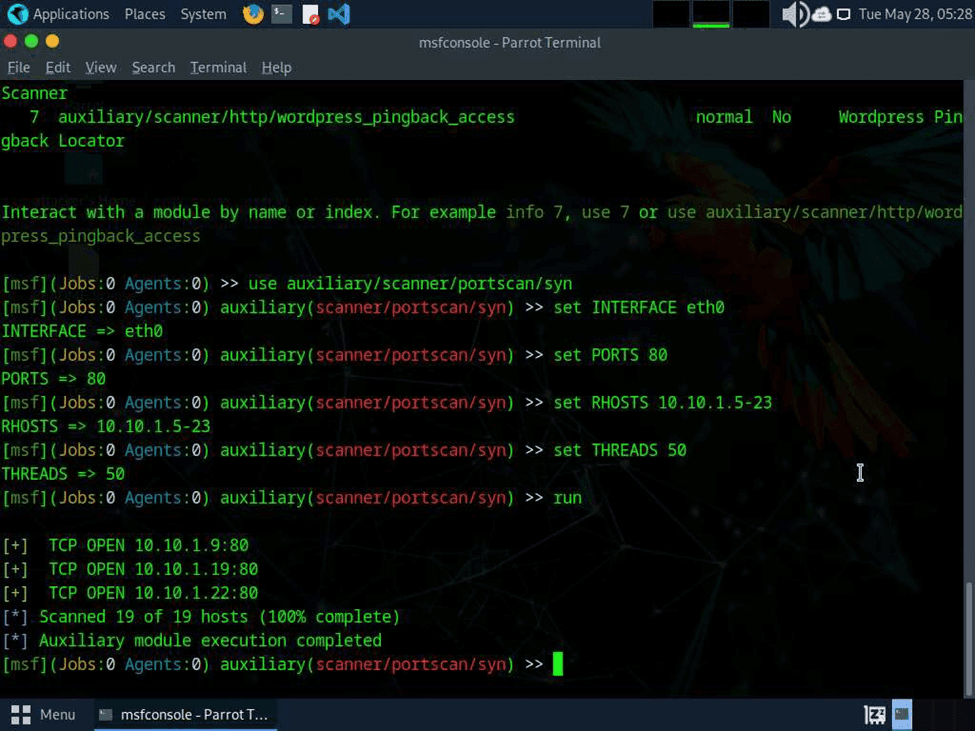
Step 5: Run the Scan
The scan was executed using:
run
Metasploit scanned the target system and displayed information about open ports and services.
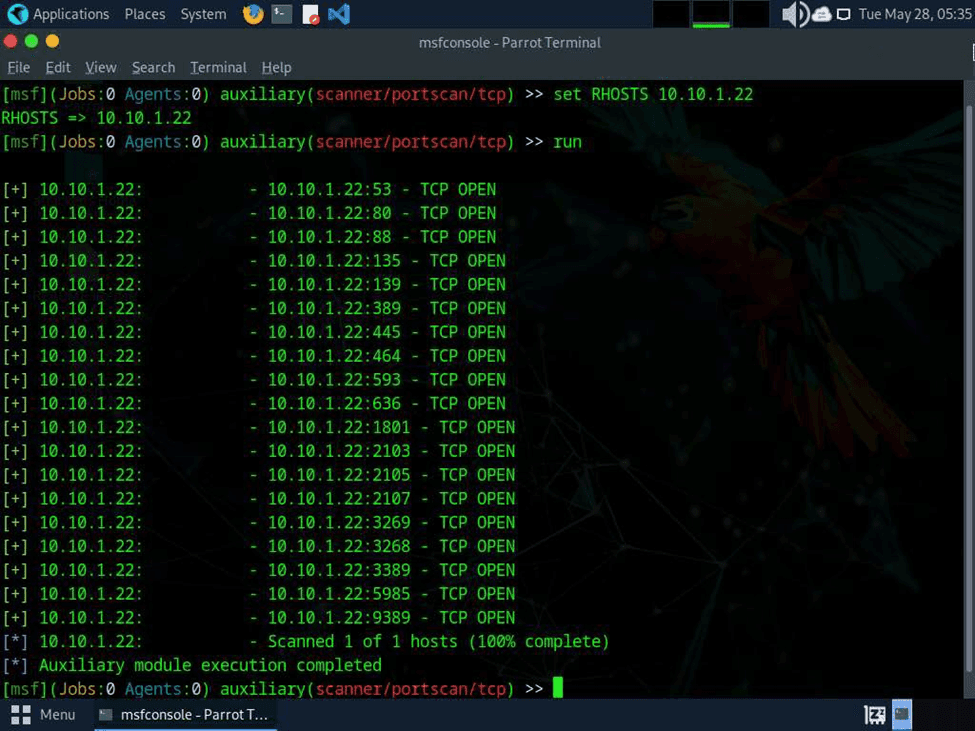
Step 6: Analyze the Results
The scan results displayed:
Open TCP ports
Active hosts
Running services
Service banners (in some cases)
The information gathered during scanning can help security professionals understand the target network structure.
Observations
During the scanning process, the following observations were made:
Metasploit successfully identified active hosts in the network.
Open ports were detected on the target system.
Some services were identified through port scanning.
The scanning process helped in understanding the network exposure of the target system.
Different scanner modules can be used depending on the required information.
The lab demonstrated how network scanning tools assist ethical hackers in gathering technical information about a target environment.
Challenges Faced
Incorrect target IP configuration initially
Slow scanning speed due to network latency
Some ports were filtered by firewall rules
Understanding the functionality of different Metasploit modules required additional practice
Conclusion
Provided hands-on experience with network scanning using the Metasploit Framework. The lab focused on identifying live hosts, open ports, and running services using Metasploit auxiliary scanner modules. It improved understanding of reconnaissance techniques used in penetration testing, vulnerability assessment, and network security analysis.
