May 18, 2022
Real Time Detection
An AI-driven surveillance framework combining drones, thermal imaging, and deep learning to identify poaching activity in protected ecosystems.

Year
2022
Author
A Abhishek
Category
Research Paper
Institution
Reva University
Paper Title
Real Time Detection of Poaching in Wildlife Reserves with Thermal Imaging and CNN using Internet of Things and Machine Learning.
Other Authors
Anusha S.N, Arbaaz Ahmed and Aishwarya Girish Menon.
Project Type
Major Project
Conference
4th International Virtual Conference on Advances in Computing & Information Technology (IACIT - 2022)
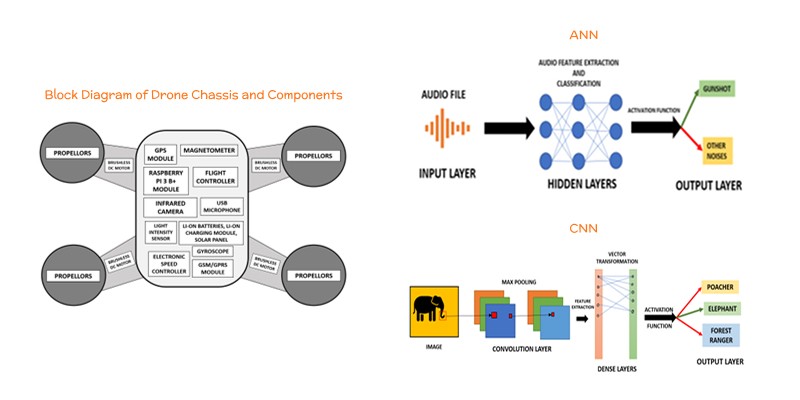
Abstract
This project proposes an intelligent wildlife protection system designed to detect poachers using thermal imaging, drones, and machine learning. By integrating IoT enabled sensors and CNN based recognition models, the system identifies suspicious human presence in protected reserves, enabling faster response and conservation monitoring.
Research Context
Poaching threatens biodiversity and ecological balance worldwide. Traditional monitoring methods are limited in coverage and response time. This research addresses the problem by leveraging automated detection technologies capable of day and night surveillance using infrared imaging and AI-based classification.
Contribution
Role: Team (4-Member group)
Responsibilities included:
Participating in system concept development
Researching ML/CNN applications for detection
Supporting design and experimentation workflow
Testing and documentation
Collaboration in technical reporting and presentation
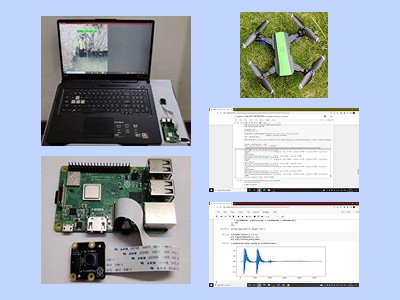
Methodology
Surveillance via UAVs (drones)
Infrared/thermal imaging cameras
IoT-based monitoring infrastructure
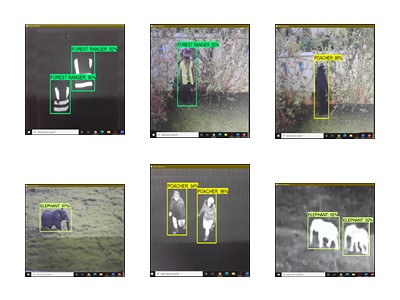
Image classification using CNN
Detection pipeline distinguishes human/poacher presence
Technologies involved: Machine Learning, Computer Vision, IoT Integration and Thermal Imaging
Key Findings
Demonstrated feasibility of automated poacher detection
Thermal imaging enabled night time surveillance
Combined IoT + ML improved monitoring coverage
Validated interdisciplinary approach for conservation tech
Impact
Exposure to large scale system thinking
Understanding integration of hardware + AI models
Improved research and collaboration discipline
Experience presenting technical solutions for real-world issues
Reinforced interest in designing impactful technology solutions
More Works More Works